
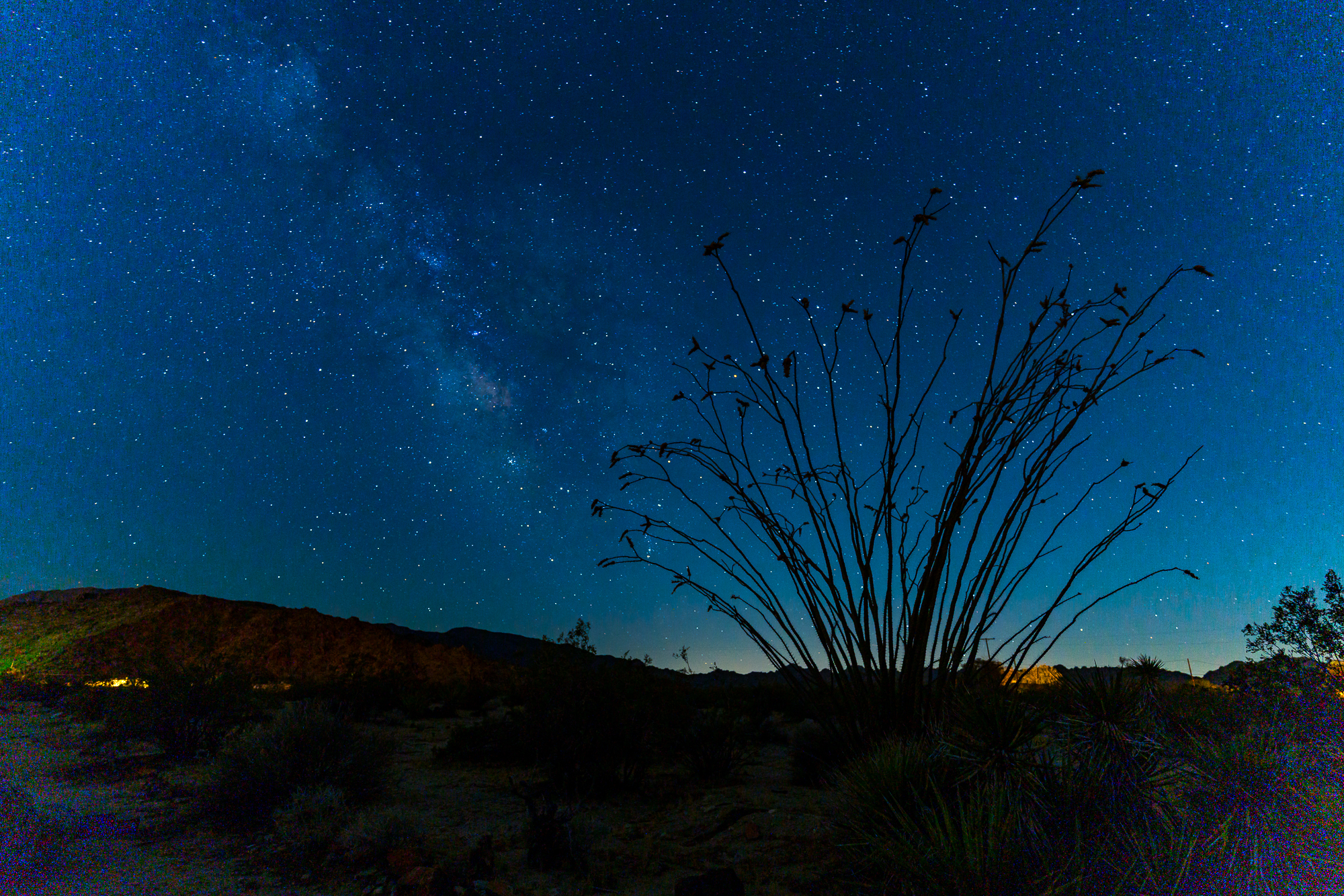
Why right now is a great time to experience something most people never see at home.
There’s a reason we call this desert home. When the sun goes down and the sky goes black, something magical happens — especially in the cooler months.
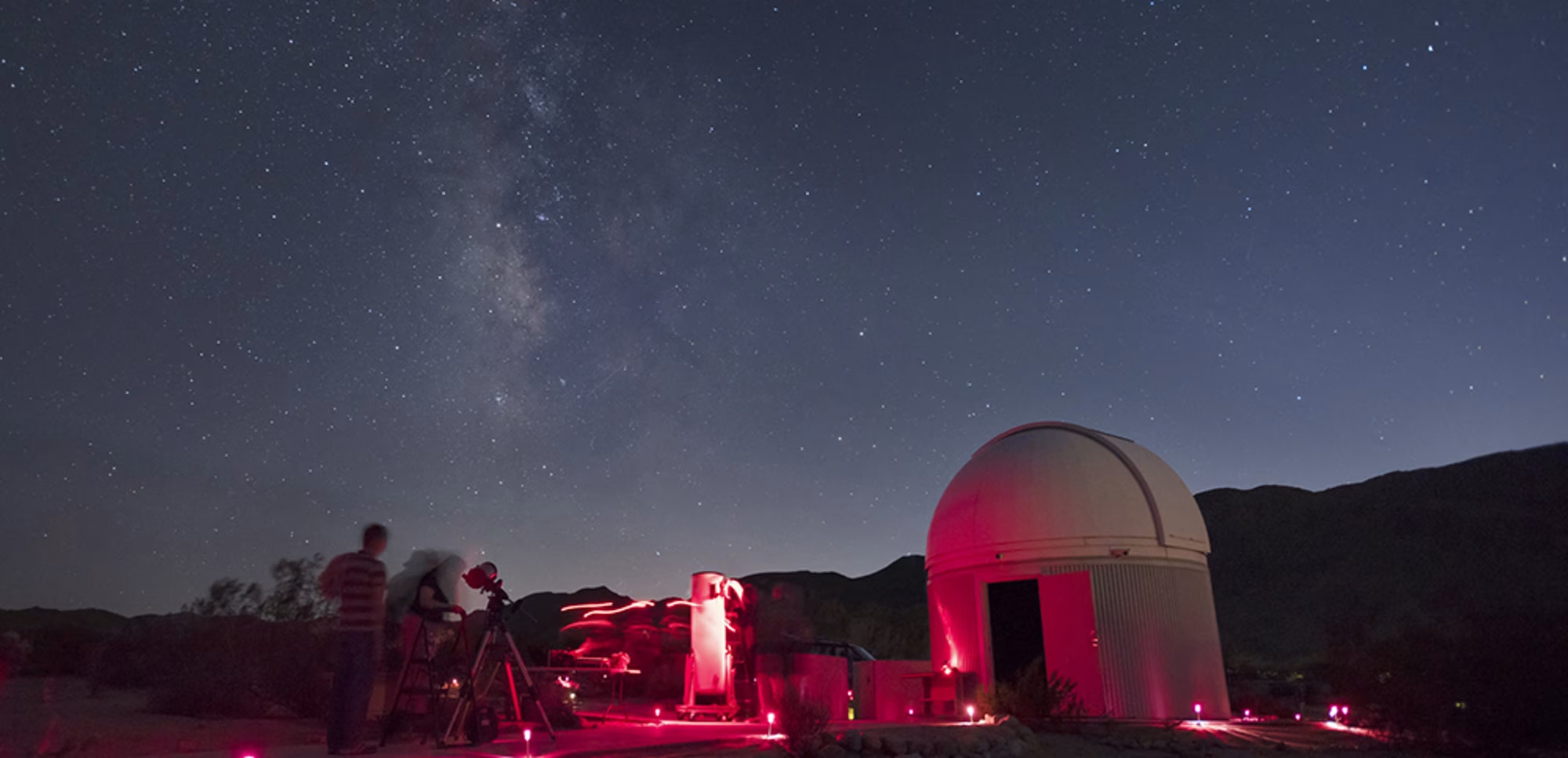
If you’re coming from a city with streetlights washing out the stars, you’re in for a treat. From the desert floor of Twentynine Palms and up into Joshua Tree National Park, the night sky becomes a literal sea of stars. On moonless or low-moon nights, the Milky Way shows up as a faint, milky band arching overhead — a sight most people never witness in their lifetime.
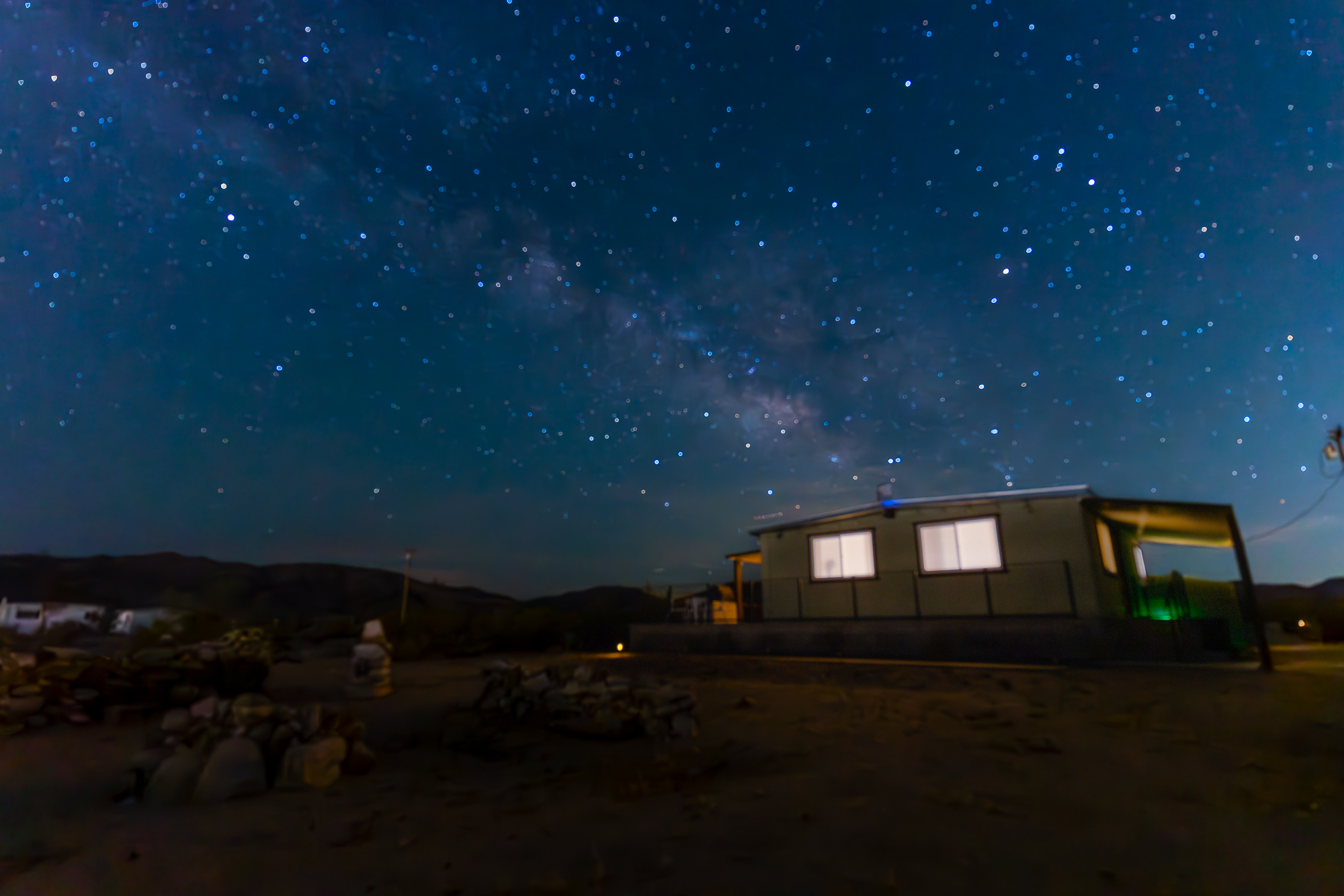
When You Can See the Milky Way Right Now
Here in the Northern Hemisphere (that’s the U.S.), the Milky Way’s galactic core — the brightest and most iconic part — is not above the horizon every night in winter. The peak “Milky Way season” for seeing that brilliantly detailed galactic center here runs roughly from late March through October, with the busiest viewing windows in June, July, and August.
That means in the heart of winter — December, January, February — the Milky Way still exists in the sky, but you’re often seeing the outer arms and band of stars, rather than the bright core that makes those classic astrophotography shots. That’s sometimes called the Winter Milky Way, and it’s visible high overhead late at night or in the early morning hours.
So yes — you can see it this time of year, but timing matters.
Moon Phase & Best Viewing Window
The single biggest enemy of star visibility isn’t clouds or cold — it’s moonlight.
Even a half-moon flooding the sky with bright light can wash out the faint glow of the Milky Way. Ideally, you’re looking for:
-
Moonless nights (new moon)
-
Nights where the moon hasn’t risen yet after dark
-
Nights where the moon sets early so the sky goes dark
For example, January 18, 2026 is a new moon, meaning prime Milky Way conditions — minimal glare and maximum stars.
Even if you’re here when the moon isn’t totally new, you can still enjoy stargazing on nights when the moon spends most of the darkness below the horizon. A quick check of an astronomy app or a moon phase calendar makes planning this easy.
Cold Nights = Clear Skies
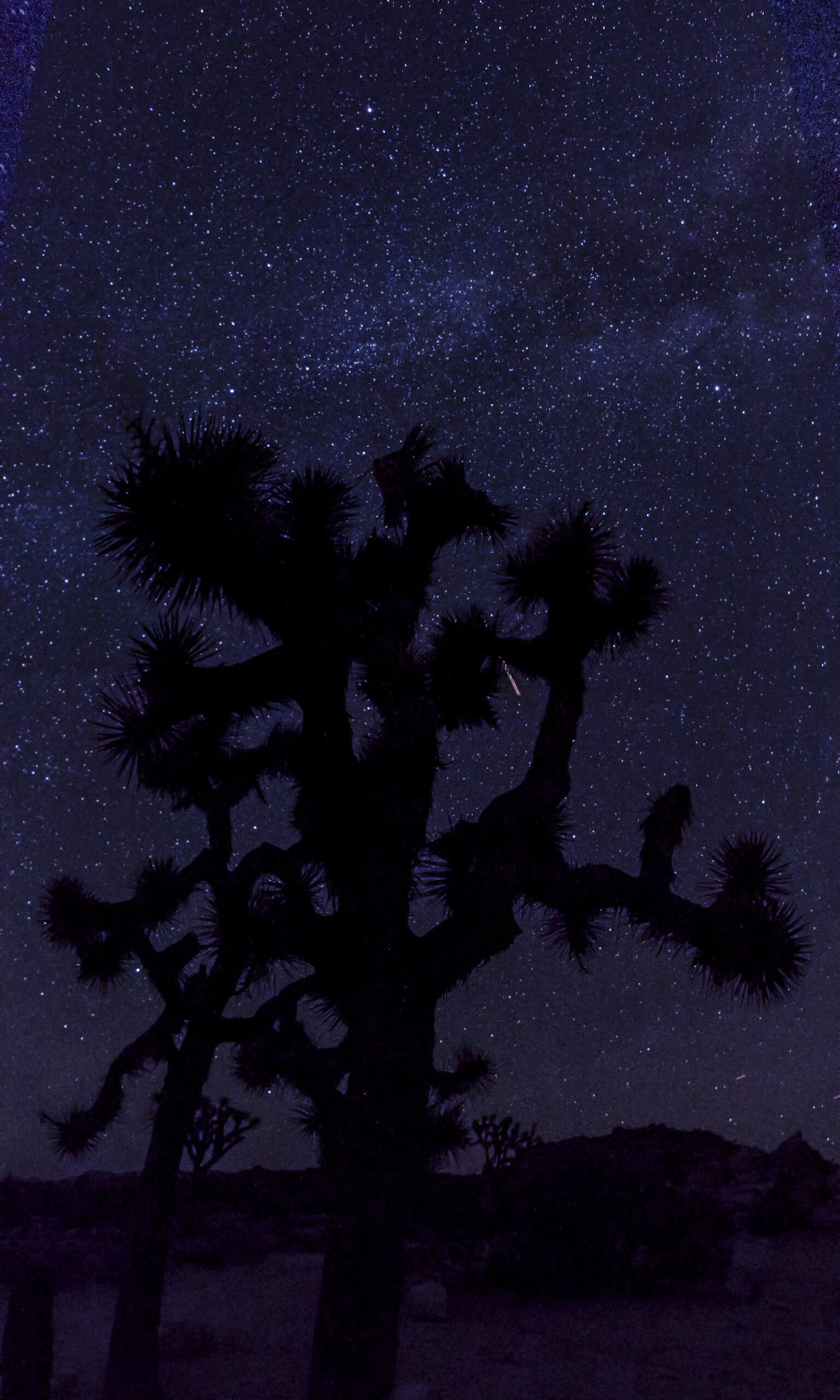
There’s a bonus to winter stargazing that most travelers don’t think about: cooler temps make for crisp, clear skies.
Desert nights in winter regularly dip into the 30s and 40s °F (0–9°C) after sunset. That dry, cold air holds very little moisture, so stars — and the Milky Way — shine with piercing clarity. Just bundle up, bring a blanket, and let your eyes adjust — after about 20 minutes in darkness your night vision really kicks in.
A Real Desert Moment
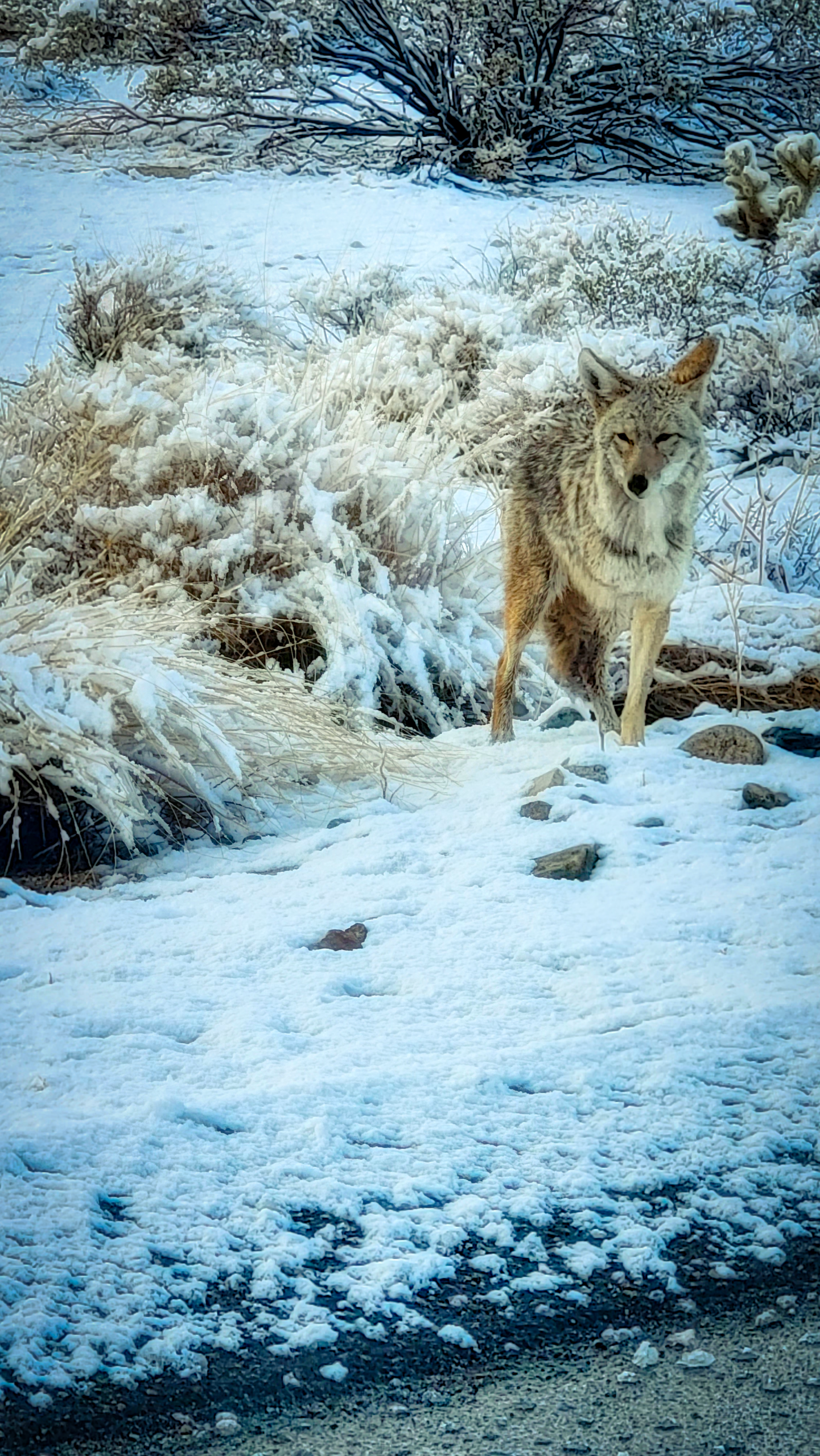
Last night I went outside to check on the animals — hogs, goats, chickens — and I swear the coyotes started a whole desert symphony out there. Everyone was safe and sound, but that moment under the stars stopped me in my tracks.
Even after more than 30 years in the desert, lifting my gaze to that vast, star-packed sky still takes my breath away. Most places in the world you can’t even see a handful of stars through the light pollution. Out here — billions of them. It’s humbling, beautiful, and something you have to see in person to really get it.
Where to Learn More & Plan Your Night Sky Adventure
Curious to dive deeper before you come?
-
🌌 Learn more about the Milky Way and what you’re actually seeing — https://en.wikipedia.org/wiki/Milky_Way
-
🌟 Joshua Tree National Park’s official stargazing tips — https://www.nps.gov/jotr/planyourvisit/stargazing.htm
-
🔭 Sky’s The Limit Observatory & Nature Center (about a mile from Roadrunners Roost) — see upcoming night sky programs and events — https://www.skysthelimit29.org
Sky’s The Limit offers guided stargazing with telescopes, which is perfect if you’ve never looked through one before.
Quick Guest Tip
If star-filled skies are on your must-see list, plan your visit around:
-
New moon windows — best time for Milky Way visibility
-
Clear, cold winter nights — atmosphere is perfect
-
Bringing warm clothes — those desert nights get chilly!
Whether you’re curled up by a fire pit or stretched out on a blanket, the stars don’t disappoint.
0 Comments