

Desert Nights, Celestial Sights: What to Look for This November
Desert Nights, Celestial Sights: What to Look for This November
Here in the wide open desert—with minimal light pollution and sweeping horizons—it’s a perfect time to step away from screens, lean back, and let the heavens put on a show. This November, here are the standout events you and your guests won’t want to miss.

1. Saturn’s Rings Nearly Disappear (Around November 23)
Even giant planets give us something special. On November 23, Saturn’s rings will appear so edge-on that they seem all but invisible from Earth. Normally the rings are a dazzling sight, but every ~15 years the Earth crosses the plane of those rings, and the view changes dramatically.
For guests staying through late evening, step out after dark and gaze toward the south-eastern sky (depending on your property’s orientation). Even if you don’t clearly see the rings, knowing this phenomenon is happening makes the moment richer. Invite guests to bring binoculars (or better, a small telescope), and find a spot away from building lights—your hot-tub vantage point or a patio under the stars are ideal.
2. Uranus at Opposition (November 21)
Uranus is at opposition on November 21—meaning it’s opposite the Sun in the sky and up all night. That’s its best showing of the year.
From a dark-sky property near Joshua Tree, with minimal light glow, guests using 10 × 50 binoculars can pick up Uranus as a faint, star-like point near the open cluster of the Pleiades. For your photography-minded guests: have them include the horizon, maybe the silhouette of the house or palms, and aim a wide-angle lens for that “tiny magical planet in the desert” effect.

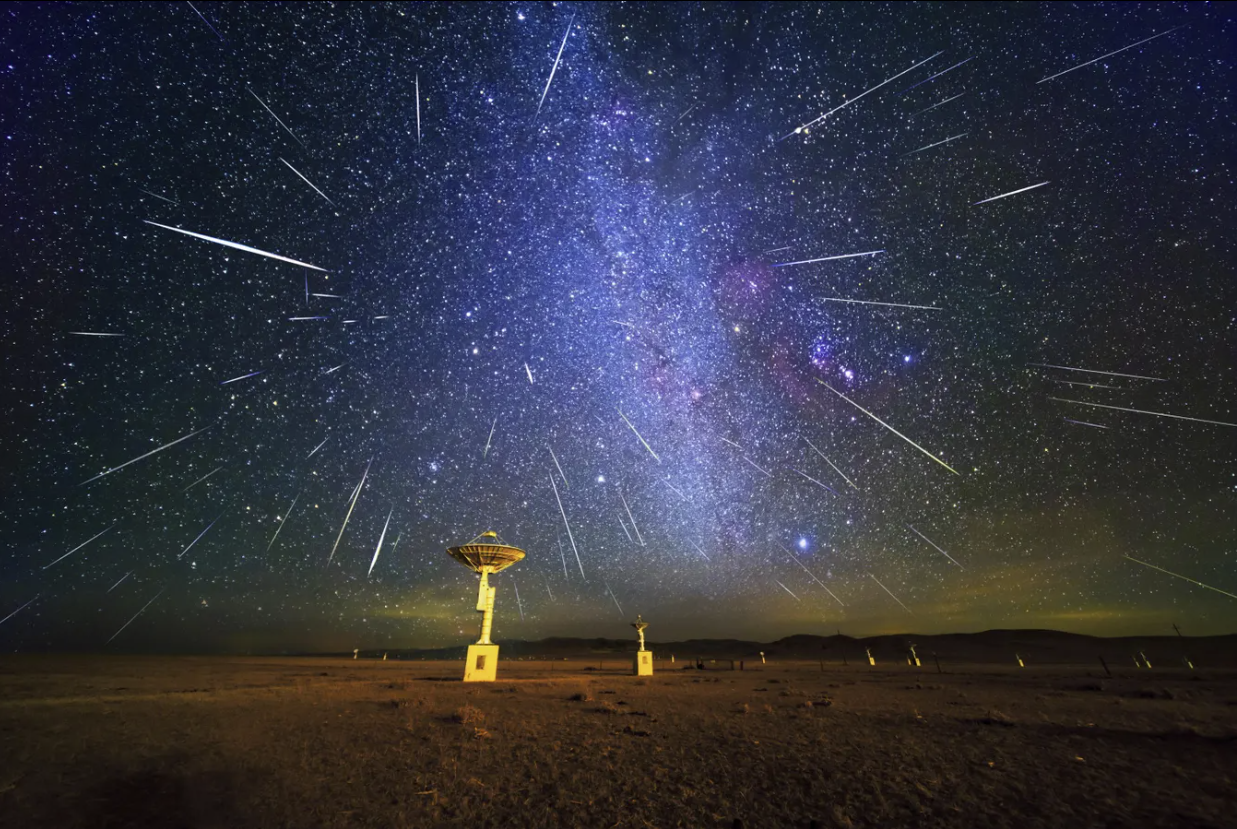
3. Leonids Meteor Shower (Evening of November 16 / Early November 17)
The Leonids make a modest appearance this month—under ideal conditions maybe up to ~15 meteors per hour. The good news: the moon will be a waning crescent, so sky brightness is low.
Head out after dusk (say 8–10 p.m.), find a comfortable spot (blanket, lounge chair, maybe by the spa or fire pit), and watch the sky between late evening and midnight. With your desert vantage point, the Milky Way will likely be visible, adding to the drama. Might I suggest some hot cocoa or a warm drink. No special gear needed—just lie back and look up.
4. Neighboring Planet Views & The Moon
-
Mercury gives a short appearance in the evening sky until about November 10, just after sunset, very low toward the west-southwest. Around that time, faint Mars lies about 5° to Mercury’s right.
-
In the early morning, look east‐southeast about 30 minutes before dawn at the start of the month. Venus will be low on the horizon with the bright star Spica just right of it—and on November 18 a thin crescent Moon will join them.

5. Deep-Sky Delights: Triangulum Galaxy (M33) & Double Cluster (NGC 869/884)
Beyond planets and meteors, November offers rich targets for guests with binoculars or cameras:
-
M33 (Triangulum Galaxy) is a faint oval patch; more of a treat for astrophotography than casual viewing.
-
The Double Cluster sits between the constellations of Cassiopeia and Perseus and can actually be glimpsed with the naked eye under dark desert skies.
As the evenings grow cooler and the desert air turns crisp, November’s night sky becomes a living work of art — painted with the soft glow of distant planets, streaks of meteors, and the steady shimmer of ancient starlight. Out here, surrounded by quiet and open space, it’s easy to lose track of time. You begin to feel that connection between earth and sky that city lights often steal away — that reminder of just how vast and beautiful the universe really is.
Whether you’re soaking in a hot tub beneath the stars, wrapped in a blanket by the fire pit, or capturing long-exposure photos from your deck, November invites you to slow down and look up. The desert sky has a way of grounding us — showing that even in stillness, there’s wonder unfolding above. So brew something warm, grab your camera, and let this month’s celestial show remind you why there’s no better place for stargazing than right here in the high desert.
0 Comments